
Commercial Cleaning9 min read
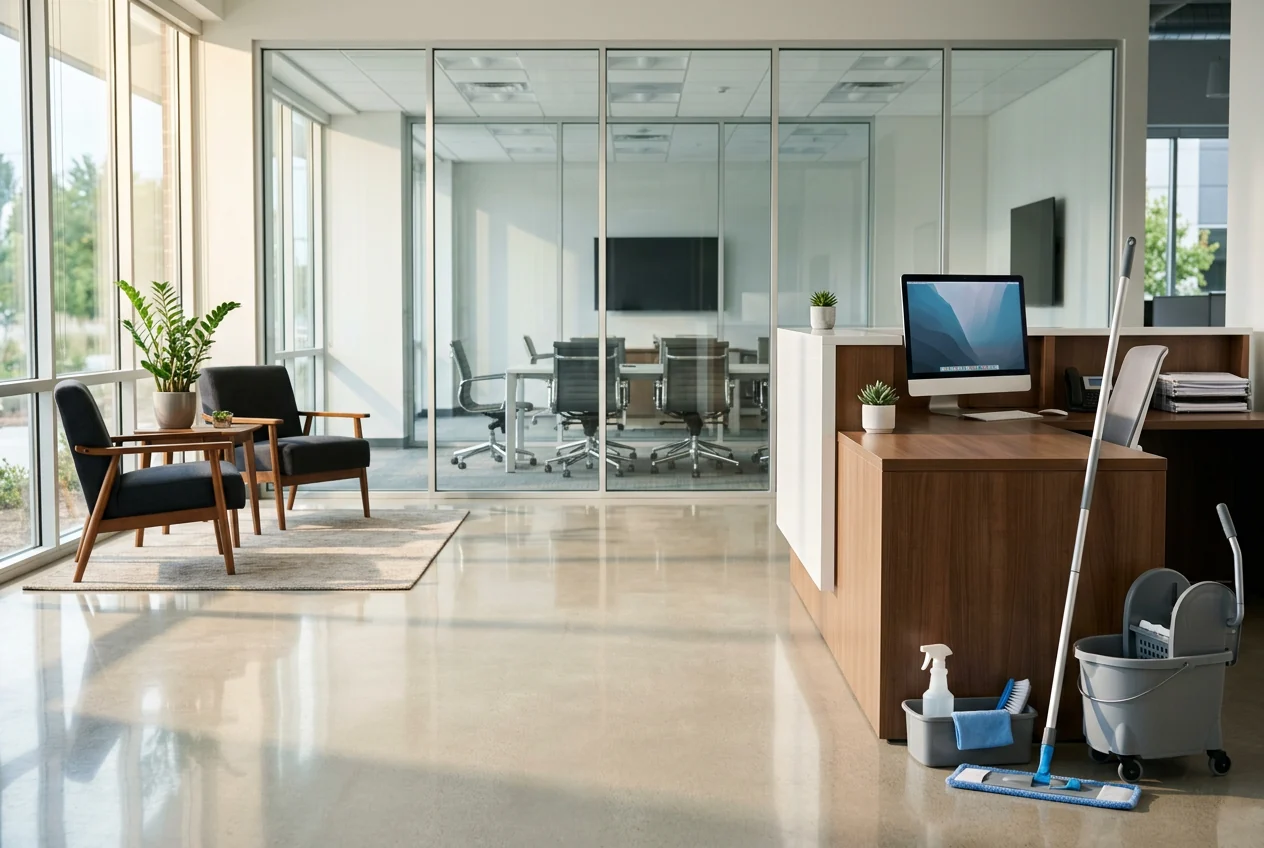
An office can look tidy while shared surfaces gradually accumulate fingerprints, crumbs and dust. A practical cleaning plan starts by assigning responsibility for everyday habits, then matching professional visits to the building’s traffic and use.
Give shared spaces a clear owner
A clear-desk habit at the end of the day gives cleaners access to work surfaces without moving confidential papers or personal belongings. Staff can put away food, dispose of waste correctly and report spills quickly. A shared kitchen works best when everyone handles their own dishes and labels food according to the workplace policy.
A practical order of work
Entrances, meeting rooms and bathrooms usually show wear faster than low-traffic corners. Watch for bins filling early, marks on glass or residue on commonly touched handles. Use compatible products on screens and specialty surfaces, and keep cleaning chemicals in designated storage.
Materials and safety
When booking commercial cleaning, explain the operating hours, access rules and priority areas. Ask how the crew will handle restricted rooms, alarms and any surfaces needing special care. A clear scope helps keep the workspace welcoming without interrupting the workday.
When to bring in a cleaning crew
When booking commercial cleaning, explain the operating hours, access rules and priority areas. Ask how the crew will handle restricted rooms, alarms and any surfaces needing special care. A clear scope helps keep the workspace welcoming without interrupting the workday.
A final walkthrough
Before calling a space finished, step back and look at it as someone entering for the first time. Check that surfaces are dry, tools are put away and any moved items have been returned. Notice what still needs attention and put it on the next list rather than repeatedly cleaning a single spot while the rest of the room waits.
- Confirm the agreed rooms and priority surfaces have been addressed.
- Check high-touch areas such as handles, switches and counters.
- Look over floor edges and corners in good natural light.
- Store products safely and let freshly cleaned surfaces dry.
The right plan is the one you can keep. Some homes benefit from small daily resets; others need a deeper seasonal visit or extra help at a transition. If you are unsure which level of cleaning fits your space, describe the rooms and your priorities when requesting a quote.
What to discuss before scheduling
Describe the condition of the space honestly. Mention pets, stairs, fragile finishes, unusual buildup and anything that should not be touched. Ask which supplies are provided and whether there are any tasks outside the regular scope. This conversation makes expectations clearer for everyone and helps prevent last-minute changes.
Walk through the practical details too: parking or access instructions, when the space will be available and who can answer a question on the day. If a task depends on moving heavy furniture, opening locked rooms or handling specialty materials, agree on that explicitly rather than assuming it is included.
When booking commercial cleaning, explain the operating hours, access rules and priority areas. Ask how the crew will handle restricted rooms, alarms and any surfaces needing special care. A clear scope helps keep the workspace welcoming without interrupting the workday.
Keep the result easier to maintain
After a thorough clean, focus on the habits that protect the result. Wipe spills promptly rather than allowing residue to harden. Give commonly used items a consistent home so counters remain accessible. In wet areas, allow air to circulate and dry surfaces where practical.
A maintenance list should be short enough to use. Divide it into daily, weekly and less frequent tasks, then adjust it after a month. If one room consistently needs more attention, shift time toward that room instead of treating every surface equally.
Entrances, meeting rooms and bathrooms usually show wear faster than low-traffic corners. Watch for bins filling early, marks on glass or residue on commonly touched handles. Use compatible products on screens and specialty surfaces, and keep cleaning chemicals in designated storage.
Choose the scope that fits your situation
A routine visit usually concentrates on regularly used, accessible areas. Detailed work takes longer because it includes more edges, fixtures or buildup. A transition clean may happen in an empty property and require attention to spaces normally hidden behind belongings. The right choice depends on condition and priorities, not just the square footage.
Ask for a clear description of what is and is not included. If you have a deadline, share it early so the work can be planned around access and drying time. A realistic scope is better than promising everything at once and rushing the most important spaces.
When booking commercial cleaning, explain the operating hours, access rules and priority areas. Ask how the crew will handle restricted rooms, alarms and any surfaces needing special care. A clear scope helps keep the workspace welcoming without interrupting the workday.
Review and adapt the plan
Once the work is complete, check the priority areas before deciding what to tackle next. A photograph can help you remember the starting condition, but it does not replace a careful walkthrough. Make note of any spots that require special products or more frequent attention.
Revisit the plan as seasons and household use change. More guests, a move or a shift in office occupancy can alter where dirt collects. Keeping the checklist flexible makes it useful instead of another chore to manage.
A clear-desk habit at the end of the day gives cleaners access to work surfaces without moving confidential papers or personal belongings. Staff can put away food, dispose of waste correctly and report spills quickly. A shared kitchen works best when everyone handles their own dishes and labels food according to the workplace policy.
Identify the high-traffic areas
Watch how people use the workspace over a normal week. An entrance and shared kitchenette may need attention more often than meeting rooms used only occasionally. Weather can change what gets tracked in, while a busy event can leave unusual amounts of waste. A cleaning schedule should respond to these patterns rather than assuming all rooms accumulate soil at the same rate.
Make sure walkways stay clear of supplies and clutter. Report spills promptly, particularly on floors where they can create a slipping risk. If there are specialist surfaces or equipment, share the manufacturer's care guidance instead of treating every desk and fitting as interchangeable.
Protect privacy while cleaning
Set a policy for papers, unlocked screens and sensitive rooms. Staff should secure documents and devices before a scheduled visit. Agree which rooms the cleaning team can enter, whether any space needs an escort and how keys or access codes are managed. Cleaning should not require someone to move private material without instructions.
For shared desks, remove food and personal items before wiping, and use products appropriate for the furniture finish. Screens and electronics need particular care; liquid should not be sprayed directly onto them. If equipment cleaning is required, define exactly what can be touched and who is responsible for it.
Keep communication simple
A single point of contact can gather reports about supplies, bins and maintenance without sending the same issue to several people. Keep the agreed cleaning scope written down, then review it if occupancy or office hours change. An early morning, evening or weekend visit may affect access, alarm arrangements and who will be present to let the crew in.
Check the result periodically, especially after a schedule change. Feedback is most useful when it names a room, surface and observation rather than a general impression. A focused plan helps everyone keep shared spaces comfortable while leaving people free to get on with their work.
Adjust as the workplace changes
A shared office that expands, changes shifts or hosts more visitors may outgrow an old cleaning schedule. Review whether bin collection, kitchenette surfaces and restrooms are receiving attention at the right times. Ask staff about recurring issues, but keep requests specific so the cleaning provider can respond to them.
For occasional events, make a separate plan for preparation and cleanup rather than squeezing everything into the normal visit. Confirm who removes decorations, food and personal belongings before the crew arrives. This lets the cleaning team focus on the agreed surfaces and leaves clear responsibility for anything outside ordinary workplace care.
Distinguish daily tidying from scheduled cleaning
Employees can help by returning mugs, clearing food and keeping shared desks accessible. A scheduled cleaner can then focus on defined surfaces, bins and floors. These responsibilities complement one another; a cleaning visit cannot easily work around stacks of papers or an overflowing sink full of personal dishes. Put simple expectations in a shared note so no one is surprised.
After a visit, collect concise feedback from the person responsible for the space. If the kitchenette needs more frequent attention or a floor finish requires a gentler method, update the scope in writing. Review it again after a change in occupancy. Small adjustments are easier than waiting until a repeated problem becomes the office's normal condition.